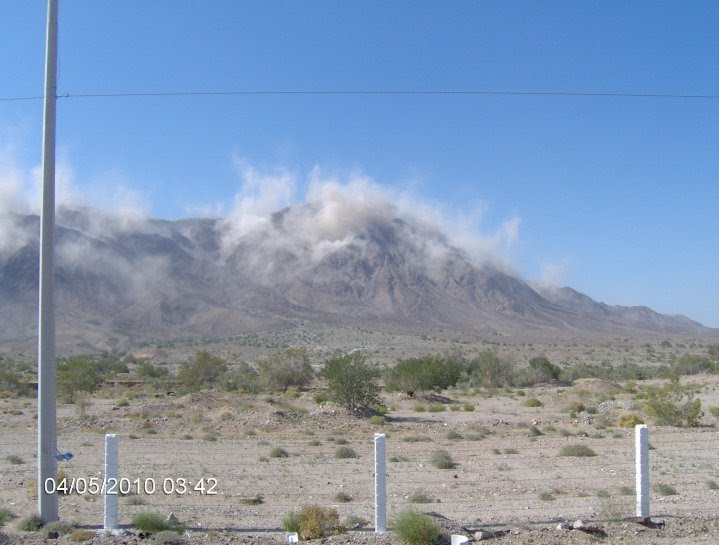
I’m trying to spend more and more time in Baja, but when the Mexicali quake hit, I’d been in the L.A. area a couple weeks, paying taxes, visiting friends and my 85-year old Mom, photographing wildflowers in the Carrizo Plain east of San Luis Obispo, and attempting to sleuth some strange health symptoms (stay tuned for another blog).
On Sunday, April 4, the day of the quake, I’d met my stepson Santiago at Barnes and Noble in Long Beach before taking him to lunch at California Pizza Kitchen, along with his son Miles, who’d just turned 15, and Miles’ 7-year old half-sister Miley [yes, the names are real!]. Santiago gets little sleep since he works nights for UPS. But each weekday he drives Miles and Miley to and from school, even though he doesn’t live with Mandy, their Mom and his ex-girlfriend. Santiago’s married to the truth, while Mandy inherited a gene for salesmanship. That, along with her glossy blond hair, dimpled smile and petite build would easily win her a seat in Congress if she were so inclined, though I doubt she’d survive the realities and brutalities of political office these days. Santiago and Mandy met in their early teens and were madly in love but fought like the Palestinians and Israelis. I know Santiago still loves her, but after 12 years of no détente, Mandy married Charles, and together they raised Miles then had Miley. A rift the size of one created by an earthquake had separated Santiago from Mandy a few years, but all’s smoothed over now.
I’d assumed as Miles reached his teens, the open affection between him and his Dad would abate. But my heart sang to see them warmly wrestling while in line at the bookstore. And Santiago seems to love Miley as if she were his own. In the restaurant, he tested her on spelling words and with happy exclamations, reached across the table to give her a high-five every time she got one right.
After lunch we drove to Santiago’s dad’s house. Victor and I met when I was 19, Santiago was a year old, and Santiago’s mother was no longer around. I left shortly thereafter for a six-month trip to Europe, and three years later moved away to start what would be many years of college, since I was working nearly full-time as well. So even though we were a pair for most of 17 years, Victor and I never officially married. Still, Santiago calls me his step-mom and sends me Mother’s Day cards every year thanking me for the years I was his Mom. And I feel blessed that we’re so close and that his Dad and I are friends again.
Oh, sorry! This blog was supposed to be about the earthquake, not family! As we walked into Victor’s house, an historic Craftsman he’s always improving with handcrafted French doors and unique painted wall designs, Victor shouted that we were having an earthquake, and Santiago pointed to the swinging chandelier. I ambled out to the backyard, waited until the rolling stopped, and immediately called my Mom. She’d been only about a mile from the epicenter of the Northridge quake in 1994, and when I’d arrived the next day to check on her, all the contents of her kitchen cabinets--ceramic dishes, drinking glasses, cereals, oils and honey--had avalanched onto the floor into a huge congealed mess. Mom’s a cool cookie, but to this day she stores gallon water bottles and flashlights throughout the house.
Mom had felt this one but less than we did, so I sat down at Victor’s computer. I'd already received an email from my friend Connie, who gets instant alerts about quakes over a certain magnitude. She’d received & forwarded emails of Mexicali rumblings over the past couple years, so the location of the quake was not a real surprise. I thought of the large, crowded city of Mexicali and was relieved that it was Easter Sunday and in the afternoon, when most Mexicalians would be home with families rather than on the roads or out shopping where shelves would be crumbling and canned goods tumbling. I hear later only two people were killed and 100 injured, although the quake’s magnitude was similar to the recent temblor in Haiti.
Several friends and my sister-in-law called and emailed during the afternoon to see if I was in Baja and if I was OK. And Santiago turned on the TV so we could view the damage. L.A. news stations showed the location on a map and were reporting on experiences around southern California and nothing from near or south of the border. Americans craving their proverbial 15-seconds of fame called in to the stations, distressed that they were evacuated from Disneyland, stuck in an elevator, or frightened when a hanging bird cage fell to the ground. With each account, Santiago and I exchanged glances of mock horror. One station repeatedly showed a video of water sloshing over the sides of a Long Beach swimming pool, and Santiago, his voice dripping with sarcasm, said, “Wow, that’s TERRIBLE!” I shuddered to think what these clueless folks would do when the Big One hits!
While Miley helped Victor ("Grampy") concoct fresh lemonade in the kitchen, we watched CNN’s interview with Lucy Jones, the earthquake guru from CalTech. "This is no surprise," she said. "We live in earthquake country. More surprising is how quiet it's been the last 15 years!" But we didn’t see CNN’s coverage, repeated later by a friend, reporting the quake’s location not in Baja south of Mexicali but in mainland Mexico at Guadalupe Victoria, a town with the same name of the town nearest the epicenter! And CNN also called it the “Southern California Earthquake.” Other stations said it had occurred “near the town of Baja.” I don’t want to say the big R word, but it was clear those we trust for reliable information [Fox News of course excluded!] are such isolationists they’re entirely ignorant of the geography of our nearest neighbor, just across the border from San Diego!
I thanked Miley as she handed me a tall cool glass of lemonade and asked Santiago “Why can’t they send a news helicopter to Calexico, in California just across the border from Mexicali? Why are they so focused on what Americans are feeling when there’s probably incredible damage just 200 miles south of us?” Santiago agreed and suggested we try the L.A. Mexican stations. Surely their regular progamming would be interrupted with news of such a large quake just across the border, where countless L.A. residents have friends or family?
But although nearly an hour had passed since the quake, more than sufficient time for videos and photos to flow in, one station was broadcasting Mexico’s version of American Idol, with a pudgy, cute 14-year old timidly singing into the microphone and flanked on either side by bikini dancers. On another station was Mexico’s version of Dancing with the Stars. What earthquake!?! No se preocupe! (no worries!). Is it any wonder why I adore the Mexican culture far more than the hype and tea-party-craziness of America? Ah but that's for another blog!
CNN finally reported on some damage the next day but still had only a few photos [http://www.cnn.com/video/#/video/world/2010/04/04/romo.lok.mexicali.quake.cnn?iref=allsearch]. Some friends of friends emailed about the damage and their driving experience along the road to San Felipe two days after the quake, with photos (see below). Another friend forwarded a Power Point presentation in Spanish that’s the first coverage I’ve seen showing extensive road damage, and fallen homes and buildings, and extensive flooding in some areas when agricultural ditches broke. I’ll forward you the presentation if you haven’t seen it; send me an email.